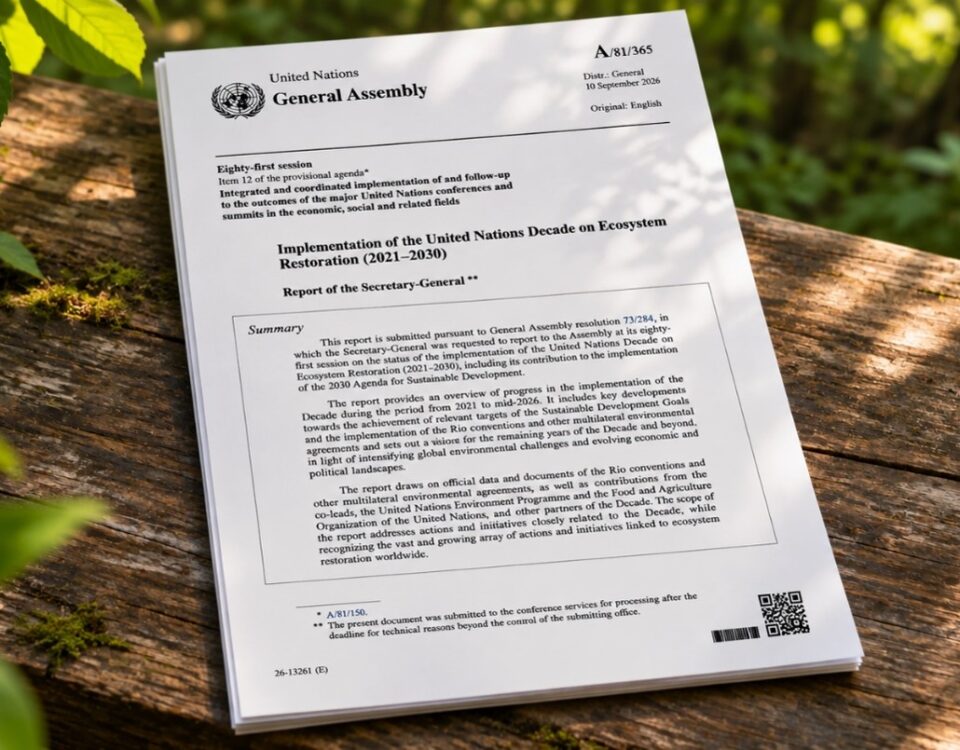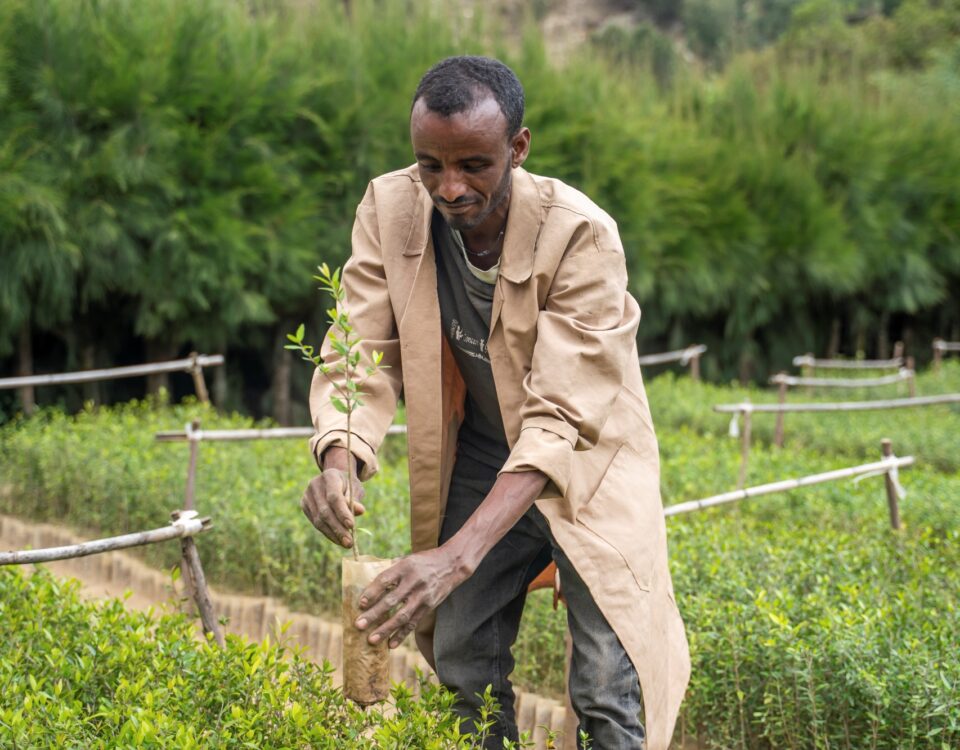









Five years into the UN Decade on Ecosystem Restoration: what has changed?
November 11, 2026
To be launched at COP31 on 19 November 2026, the publication identifies how existing data and monitoring efforts can help countries measure progress towards the Global Goal on Adaptation.

12/11/2026
As countries work to turn global climate adaptation commitments into measurable progress, a new technical paper from the Food and Agriculture Organization of the United Nations (FAO) examines how existing data, tools and monitoring systems can help track the contribution of forests and other ecosystems to climate resilience.
Tracking ecosystem-based adaptation indicators of the global goal on adaptation explores how countries can draw on information on forests, wetlands, mountains and ecosystem restoration to monitor progress against the Belém Adaptation Indicators. The publication will be launched on 19 November 2026 at the 31st United Nations Climate Change Conference (COP31) in Antalya, Türkiye.
The paper comes at a critical moment for international climate action. At COP30 in Brazil in 2025, countries adopted 59 indicators to measure progress towards the Global Goal on Adaptation, established under the Paris Agreement. With technical work on their methodologies and implementation now advancing, countries face the challenge of translating these global indicators into practical national monitoring systems.
The new FAO paper contributes to this effort by identifying available data sources, technical capacities and opportunities for collaboration, while highlighting methodological gaps that must still be addressed.
Amy Duchelle states that “For FAO, the value of adaptation monitoring lies in the support it provides to decision-makers: where to invest, whose needs to prioritize and when to adjust course. The evidence we generate must help protect the lives and livelihoods of people facing growing climate risks.”
Closing the adaptation monitoring gap
Forests, wetlands and other ecosystems play a vital role in helping communities adapt to climate change. They regulate water flows, reduce flood risks, protect soils and other species, support food production and sustain livelihoods. Their conservation, sustainable management and restoration are therefore increasingly recognized as important components of national adaptation plans.
However, measuring their contribution to climate resilience remains a challenge. Similarly, currently, many countries have challenges of knowing if and how well their forests and ecosystems are adapting themselves to climate change. According to an FAO and United Nations Development Programme assessment cited in the paper, 95 percent of developing countries with national adaptation plans report climate-related impacts on ecosystems. Yet only 38 percent of the assessed plans include indicators to monitor ecosystem- and biodiversity-related adaptation measures.
This gap underscores the need to strengthen monitoring, evaluation and learning systems to understand whether adaptation measures are delivering results for ecosystems and the people who depend on them.
The publication focuses particularly on the Global Goal on Adaptation’s target for ecosystems and biodiversity, while exploring connections with water management, urban resilience and broader, dimensional adaptation processes along the adaptation cycle.
Building on existing data and expertise
A central takeaway from the paper is that countries do not need to start from scratch. Many already have valuable monitoring efforts developed through forest management, biodiversity conservation, ecosystem restoration and climate change mitigation efforts. These provide a foundation that can be adapted and strengthened to support adaptation monitoring.
For example, national forest monitoring systems and FAO’s Global Forest Resources Assessment (FRA) can provide information on changes in forest extent, condition and disturbances. The Framework for Ecosystem Restoration Monitoring (FERM) can contribute information on restoration progress, while established geospatial tools and national monitoring initiatives offer opportunities to track changes across mangroves, peatlands, mountain ecosystems and other landscapes.
Making better use of these systems, tools and national capacities could strengthen adaptation reporting while reducing duplication and avoiding unnecessary reporting burdens.
The paper also underscores that measuring ecosystem health or area alone is insufficient. Understanding the effectiveness of ecosystem-based adaptation requires information about the people who depend on these ecosystems, including changes in livelihoods, vulnerability and adaptive capacity.
Significant challenges remain, particularly in developing consistent definitions of ecosystem resilience, integrating information across institutions and determining how observed improvements can be attributed to specific adaptation actions.
From global indicators to national action
The publication sets out several priorities to help countries operationalize ecosystem-based adaptation indicators. These include strengthening national monitoring capacities, taking stock of existing datasets and institutional responsibilities, integrating ecological and socioeconomic information, and advancing methodologies to assess adaptation outcomes.
Through the report, FAO recommends closer collaboration among governments, UN agencies, research institutions, civil society and development partners to test and refine monitoring approaches. FAO calls for further collaboration with technical partners to support effective operationalization of national monitoring, evaluation and learning systems. FAO’s Forestry Division calls partners to express interest, and help shape a new community of practice on monitoring, evaluation and learning, focused on ecosystem-based adaptation through this survey.
FAO is already supporting countries through forest monitoring, geospatial platforms, ecosystem restoration initiatives and capacity development. Projects such as the Monitoring, Evaluation and Learning Framework for Ecosystem-based Adaptation in Forests and Agriculture (MELBA) in Malawi are helping develop and test approaches for assessing adaptation outcomes.
These efforts can help connect established monitoring capacities with emerging adaptation reporting needs, enabling countries to better understand how ecosystems contribute to resilience and where further action is required.
The publication will be launched on 19 November, from 11:45 to 13:00, at the Japan Pavilion, during the COP31 event “Toward Maximizing the Roles of Forests in Contributing to Nature-Based Solutions.”
Read the publication: Tracking ecosystem-based adaptation indicators of the global goal on adaptation (FAO, 2026).
Share your views on the community of practice through this survey.