






Artificial intelligence in forest monitoring: uses, applications, adoption and precautions
February 6, 2026
Open Foris: Open-source solutions for Forest and Land monitoring
February 19, 2026

17/02/2026
Over the past months, the Food and Agriculture Organization of the United Nations (FAO), the Secretariat of the Convention on Biological Diversity (CBD) and partners have convened countries across all regions of the world to strengthen restoration monitoring and reporting; translating restoration commitments into measurable progress.
The recent workshops in Bangkok, Bogotá and Nairobi were organized jointly by FAO and the CBD in close collaboration with the CBD’s regional Technical and Scientific Cooperation Support Centres (TSCCs) and were supported by the AIM4NatuRe Initiative. By engaging 40 countries, nearly 230 participants and 13 regional centres, the three workshops formed part of a coordinated and sequenced delivery approach under the Target 2 Road Map – a global partnership to monitor and accelerate progress towards GBF Target 2. The TSCCS’ local expertise and proximity to the countries were crucial to generate and share high-quality restoration data and to enable knowledge and expertise exchange, and for promoting cross-regional learning.


Bangkok: strengthening monitoring systems
In Bangkok, 10 countries from Asia and the Pacific met with 77 participants and five regional centres, including the ASEAN Centre for Biodiversity.
The focus was on systems and interoperability. Countries examined how to integrate geospatial information, inventories and project-level data into coherent monitoring frameworks. Baseline definition and degradation assessment were central topics, along with the four outcomes under Target 2.
Participants worked through practical exercises on structuring data, applying indicators and using technical solutions such as the FAO Framework for Ecosystem Restoration Monitoring (FERM) to support reporting.
Common challenges were identified, including fragmented data systems, limited interoperability between platforms and gaps in monitoring coastal and marine ecosystems. Regional cooperation was highlighted to accelerate progress through shared methods and experience.
Bogotá: getting the fundamentals right
In Bogotá, 19 countries from Latin America and the Caribbean gathered for a Subregional Dialogue on biodiversity monitoring and reporting. 71 participants worked with three regional centres – the Humboldt Institute, the Central American Commission for Environment and Development (CCAD) and the Caribbean Community (CARICOM).
Discussions focused on defining degraded land, establishing national baselines, and agreeing on consistent approaches to measuring ecological integrity and restoration outcomes across countries.
Participants worked through the FERM as a practical structure for organizing national data and aligning it with Target 2. They examined how national systems align with global reporting requirements and identified adjustments needed to ensure consistency and comparability.
The dialogue was inclusive of Indigenous and territorial perspectives, linking restoration monitoring to governance, livelihoods and long-term stewardship. Countries left Bogotá with clearer gaps identified and concrete actions for 2025–2027.
Nairobi: anchoring support in the region
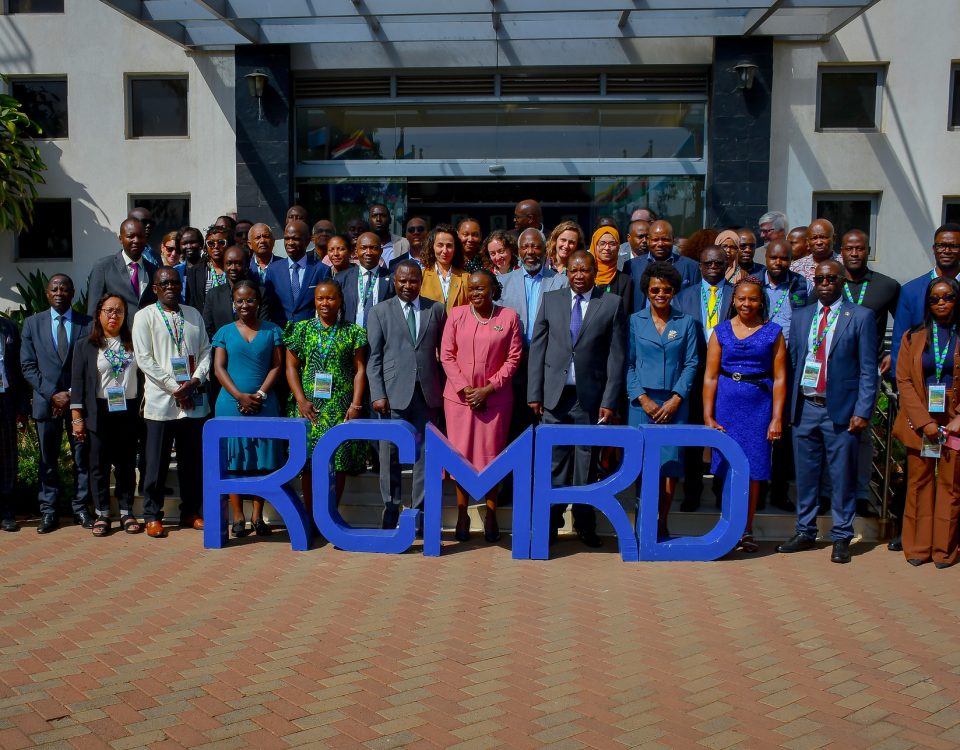
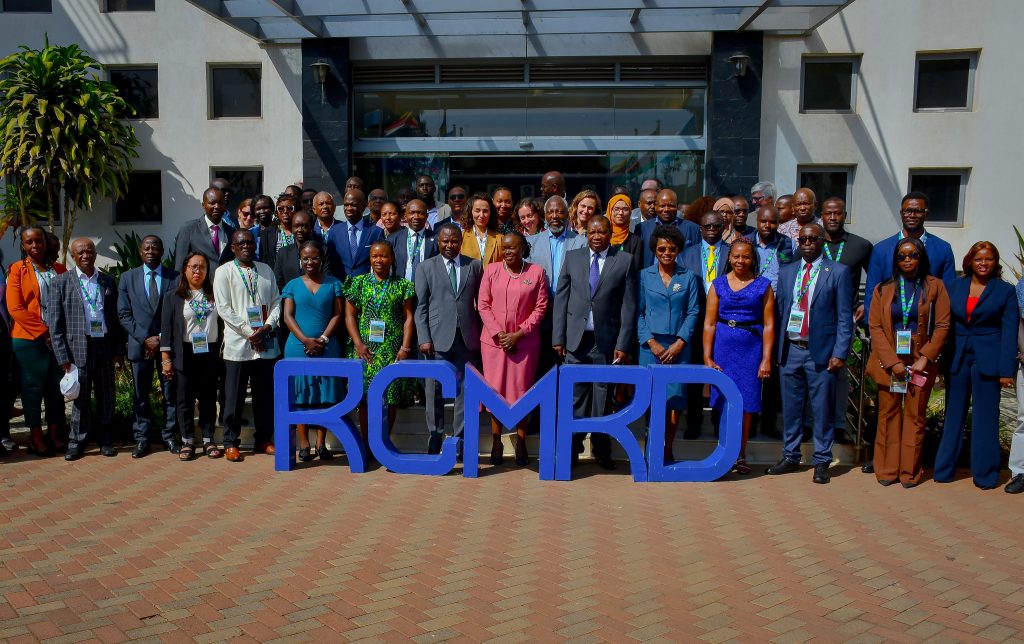
In February 2026 in Nairobi, 11 countries from Eastern and Southern Africa came together for a high-level subregional workshop. 79 participants took part, supported by five regional centres: the Regional Centre for Mapping of Resources for Development (RCMRD), the Central African Forests Commission (COMIFAC), the Sahara and Sahel Observatory (OSS), the Centre de Suivi Écologique (CSE) and the South African National Biodiversity Institute (SANBI).
The meeting marked the official launch of the Regional Centre for Mapping of Resources for Development as a Subregional Technical and Scientific Cooperation Support Centre, providing the region with a formal structure for coordinated scientific and technical support on restoration monitoring.
Countries discussed shared constraints, including limited technical capacity, gaps in data availability and increasing pressure on land and ecosystems, and identified practical steps to strengthen coordination and institutional capacity.
.png?sfvrsn=c083d039_1 "Strengthening regional capacity for restoration monitoring under GBF Target 2")
One approach, regional delivery
Across the three regions, the approach was structured and aligned with the Target 2 Road Map. The workshops were organized through regional Technical and Scientific Cooperation Support Centres, in line with the mandate of Working Group 3 on national and regional capacity development, and focused on strengthening national monitoring and reporting systems. They were supported through AIM4NatuRe (Accelerating Innovative Monitoring for Nature Restoration), a FAO-led initiative that provides coordinated technical assistance, technical solutions and capacity development to help countries track restoration progress. AIM4NatuRe is implemented as part of the AIM4Forests Programme and is supported by the United Kingdom, reinforcing FAO’s role in delivering practical, data-driven solutions to support implementation of the Global Biodiversity Framework.
This structured approach reinforces the principle that while global targets are implemented at national level, regional coordination strengthens consistency, efficiency and long-term sustainability. By working through established regional centres, technical support is better aligned with national contexts and more likely to be sustained beyond individual project cycles.
The scale of engagement reflects broad regional commitment: 40 countries participated, nearly 230 technical and policy experts were involved, and 13 regional centres were mobilized. Beyond these figures, the more substantive outcome lies in strengthened institutional capacity. Technical teams have improved guidance on baseline development and indicator application, coordination among institutions has been reinforced, and regional cooperation networks have been consolidated.
Further regional workshops are planned for 2027/28 with other technical centers to extend this coordinated approach and to reinforce national and regional monitoring and reporting systems necessary for the effective implementation of Target 2.
As the international community moves closer to 2030, the pressure to show measurable progress will increase. These three workshops show that implementation is advancing in a practical and sustained way.
The outcomes of these events now being discussed and explored during the sixth meeting of the Subsidiary Body on Implementation (SBI-6), being held from 16 to 19 February 2026 at FAO headquarters in Rome. The meeting will provide an opportunity for Parties to take stock of progress and assess how support under the Target 2 Road Map is being delivered and scaled.